
Trace Past Wayne County Owners
A backward chain always starts with the newest recorded deed and works from grantee to grantor. Every entry should be logged the same way. Record the date, the parties, the deed type, the book and page or instrument number, and the full legal description. That detail keeps the chain honest. Because the Clerk publishes no first year for the online deed index, the table separates known historic collections from coverage you must confirm with the office. A statewide collection is not a full deed run.
| Source | Years It Covers | Where Held | What It Shows |
|---|---|---|---|
| Wayne County Clerk Document Inquiry | Online start year not located | County Clerk portal and office | Recorded land documents; search fields not confirmed |
| Wayne law-order-book microfilm | 1843-1859 | FamilySearch catalog; courthouse originals | Court proceedings, not a full deed series |
| WV Wills and Deeds collection | Ca. 1700s-2017, multiple counties | FamilySearch | Index and images where access allows |
| Statewide Preservation Project | Wayne listed completed; exact books not listed | WV State Archives and County Clerk | Deed-book preservation images |
| Wayne Public Library local history | Exact directory years not located | Wayne Public Library | Family histories, census material, cemetery registers |
The County Clerk holds the land transfer itself. Archives and FamilySearch cover older volumes. The law-order catalog is a court source, and the library works as a local-history helper rather than a deed custodian. When a gap appears, note it and ask the Clerk which book, index, or film covers that stretch of the ownership chain.
Wayne County Online Index Years
The Wayne County Clerk promotes a "vast database" through Document Inquiry, one that spans deeds, marriage licenses, tax information, and other documents. No official first year is published. A blank result proves nothing. Treat empty searches with caution, because they are not evidence that a property had no earlier owner.
Ask the Clerk what date span the index covers and whether book and page images are attached. If a name search stalls, loosen it. Try spelling variants, an approximate recording year, the legal description, or the parcel clue from the assessor. Copy and certification fees change often. The Clerk's page lists phone 304-272-6362, fax 304-272-5318, and P.O. Box 248, Wayne, WV 25570.
The Document Inquiry link is the online route, and the Clerk contact page is the fallback.
Walk the Wayne County Deed Chain
Begin at the current owner of record. Read the parties and the land description on the recorded instrument. The grantee named there is your next target. Search that name in earlier records, and keep following transfers until the legal description changes, the record set ends, or an estate, tax, or court transfer points to a different source. One transfer deserves one row. Collapsing several names into a family history hides the breaks that matter in a deed chain.
- Write down the latest deed’s date, grantor, grantee, legal description, and reference number.
- Search the grantor as a grantee to locate that party’s acquisition.
- Compare lot, block, acreage, and adjoining calls to be sure the same land continues.
- Repeat backward and note where a book, probate filing, or court order changes the path.
- Grantor
- The party who transferred an interest.
- Grantee
- The party who received the interest.
- Chain of title
- The ordered set of land transfers.
- Legal description
- The land description that can survive a street-name change.
Wayne County Court Microfilm, 1843-1859
FamilySearch catalogs Wayne County law-order books from 1843 through 1859 as microfilm of courthouse originals. These are court records. They do not form a complete deed-book inventory. A chain reaching early Wayne County gains context from them, and every entry points back to the courthouse as the original keeper. A separate family-history collection broadens the view. It covers West Virginia wills and deeds from multiple counties across a much wider date span.
Identify the film through the Wayne law-order-book catalog title. Then search the relevant name, date, or case clue within the images. Confirm any land transfer against the County Clerk instrument, since a court order may explain authority without serving as the recorded conveyance. Image access varies by account and collection limits.
The catalog situates an old court entry. The deed itself must still carry the transfer within the land ownership chain.
Wayne County Deed Preservation Images
The Statewide Preservation Project lists Wayne County as completed for deed-book digitization. The process is straightforward. County deed volumes go to the State Archives for imaging, the books come back, and images remain for preservation. No volumes or start year appear in the listing. So it offers a route, not a guarantee.
Ask the Clerk which book covers the date. Then compare the index entry against a State Archives image or a FamilySearch result. Incomplete book or page references deserve a second look. Note the gap and ask whether the volume was reindexed or preserved in another series. Keep the deeded legal description beside the parcel number, because the map reference may have changed.
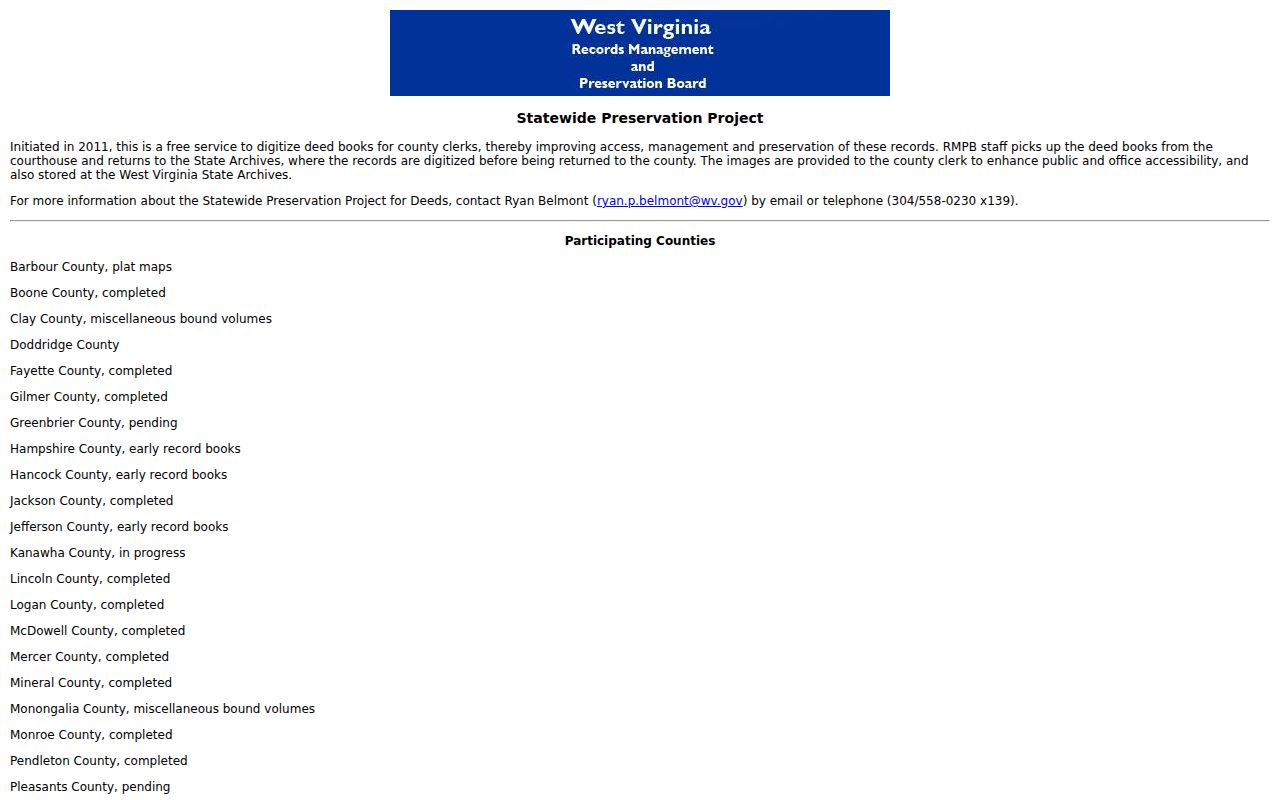
The image displays the deed preservation project's current status. For the exact years of coverage, contact the Wayne County Clerk or the archive directly.
Old Wayne Names in an Ownership Chain
Older Wayne instruments may name Trout's Hill, Wayne Courthouse, Fairview, or simply Wayne. The town incorporated as Fairview in 1882. It officially became Wayne in 1911. Those labels appear in old deeds and notices. When a transfer seems to vanish after a town-name change, search the old and current place names together.
Wayne County was created in 1842. West Virginia statehood followed in 1863, so early land research crosses the older Virginia setting and later state records. A modern portal misses early owners. Trust party names, exact land calls, and the courthouse volume instead.
Wayne County Fire History and Record Gaps
Wayne County local histories mention two damaging blazes. A 1905 fire struck Wayne town. A 1921 courthouse fire broke out during a county-seat dispute. No archival inventory shows which deed books or indexes either fire touched. So treat a gap in a chain of title with care. Never call a missing deed a fire loss unless a source names the affected volume.
A gap calls for a simple method. Record the last deed before it and the first deed after it. Then ask the Wayne County Clerk and the State Archives about an index. It may have been reconstructed, relocated, or preserved on microfilm. Transfers can hide in unexpected places. Probate files, court records, tax deeds, and mineral records often explain a conveyance that looks nothing like a normal sale. Some older property records exist at the courthouse or archive yet remain absent from online indexes. So a persistent search pays off. The e-WV Wayne history account supplies the courthouse context.
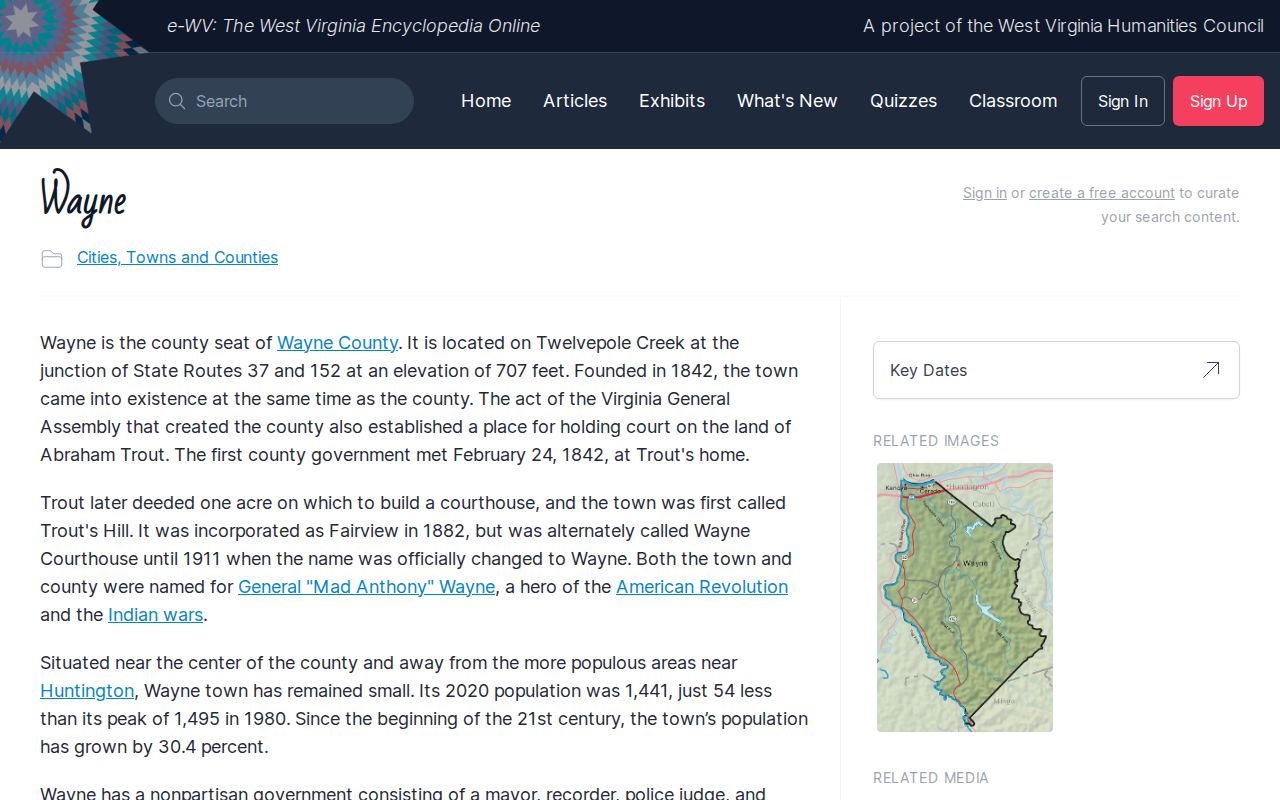
Treat the history image as a prompt for archival digging, not as proof that any Wayne County deed book perished.
Estate Transfers in Wayne County Chains
A prior owner's death can move land in several ways. A will, an estate affidavit, ancillary administration, or an executor's deed each leaves a different paper trail in Wayne County. The county probate office works by appointment. It also posts forms for small estates, estate appraisement, ancillary administration, and fiduciary appointments. Search the probate file and the recorded land index side by side. The probate order establishes who had authority. The recorded instrument then ties that authority to the parcel. That is why Wayne County property records reward looking at both.
Vital records help with family history but carry no title. West Virginia opens death and marriage records after 50 years. It opens birth records after 100 years, with limits on sensitive details. A genealogy index is not a certified certificate. It is also not a deed. For one copy of a land instrument, follow the Wayne County deed-record process. A probate question may require a vital-record document. The West Virginia Vital Registration ordering page describes the request channels. It publishes a $12 copy fee plus mail, in-person, and online options.

A vital record can document the family event. The Wayne County deed or estate instrument is still what connects that event to land ownership.
How Far Back Wayne County Owners Can Be Traced
Wayne County publishes no official start year for its online deed index. Some records are firm. Courthouse law-order microfilm covers 1843-1859, a FamilySearch wills-and-deeds collection spans the 1700s through 2017 across multiple counties, and Wayne's preservation project is complete. None of that guarantees every deed book is indexed or viewable online. When a chain hits a boundary year, ask the Clerk for the exact book range.
For a very early parcel, track the legal description and the grantor and grantee names through the courthouse index, the State Archives, and available microfilm. Wayne County formed in 1842, and its pre-1863 years fall under Virginia, which can shift where the first land reference sits. A chain may reach an original grant or patent. The county itself lists no first deed date, so the old records tell you where the trail began.
Lawful use. Trace former owners for house history, title research, and property diligence. Do not use names or addresses to track, threaten, or harass a living person.