
Fields in Wayne County Tax Records
Two records cover a Wayne County parcel. The assessor's appraisal shows the owner of record, parcel number, acreage, class, land-use code, tax class, and appraisal figures. The tax side adds bill headings. Year, ticket, name, and totals due all appear there. Together they pair what a parcel is worth with what it owes on the tax roll.
| Field | What It Shows | Where |
|---|---|---|
| Land, building, total appraisal | Separate value components in the assessment result | WV Property Assessment Search |
| Owner and parcel | Current Owner, address, district, map, parcel, acres, class | Assessor result and detail |
| Tax year and ticket | Annual bill key and account number | Wayne Tax Inquiry / Sheriff Tax Bureau |
| Billed and paid totals | Total paid, total billed, first half, second half, total due | Tax Inquiry headings |
| Description and billing address | Map-parcel, land description, bill destination | Tax Inquiry headings |
West Virginia assesses most property at 60 percent of true and actual value. That fraction shapes every Wayne County appraisal. A tax bill depends on more than the appraisal alone. Exemptions and the last-sale price stay off the parcel card. Land, building, and total appraisal each get their own line. No single value field predicts the tax total. A bill is never proof of a recent purchase price.
Wayne County Tax Year and July 1
West Virginia's assessment date lands on July 1 each year. Wayne County's Sheriff Tax Bureau freezes the name, value, and mailing address file on that date. The freeze governs the next tax year. A buyer's deed may record later. The buyer can then open a tax bill still addressed to the seller. The bill is a fiscal account, not a deed. The recorded deed remains the better proof of transfer.
When a bill name looks stale, compare the tax year and ticket against the parcel ID. Then check the newest deed. Both parties may receive notices. Paying twice helps no one. The Sheriff Tax Bureau can confirm how the account stands. Its page lists Thursday hours until 6 p.m. with mail and in-person payments. The Sheriff Tax Bureau's tax-cycle page explains this timing issue in full.

The page explains the annual freeze, not parcel balances.
Wayne County Tax Inquiry Headings
The Wayne Tax Inquiry result lists year, type, ticket, and name. It also includes account number, map-parcel, description, and billing address. First-half, second-half, total billed, total paid, and total due round out the columns. That detail lets you frame a precise question for the Sheriff if the form stalls. The county does not spell out which fields are searchable online. Years covered stay equally quiet.
Match the parcel description and map-parcel to the name. Names repeat. Keep the payment halves separate too, since total due shifts with timing. The Sheriff's page lists checks payable to Sheriff of Wayne County and a P.O. Box for mail. Confirm current instructions before sending anything.
The Wayne Tax Inquiry is the online account route. Meanwhile, the Sheriff's page supplies contact and payment information.
Find a Wayne County Tax Bill
A Wayne County tax bill stays tied to its tract by map-parcel, account number, owner name, or description. The tax inquiry lists those fields. Year, ticket, billing address, payment halves, and totals appear too. If the online form will not load, the Sheriff Tax Bureau takes mail and in-person payments. Staff can route questions by ticket or map-parcel. Start with the parcel, not the name.
- Find the parcel key in MapWV Assessment and note its district, map, parcel, owner, and physical address.
- Open the tax inquiry if available, then compare its ticket, description, tax year, and billing name with the assessment record.
- Call the Sheriff Tax Bureau at 304-272-6723 when an online bill is unavailable or a payment needs confirmation.
- For a recent closing, compare the newest deed because the tax file may still show the prior owner.
- Assessed value
- The statutory value used as the tax base, generally set at 60 percent of true and actual value.
- Levy
- A taxing authority’s rate applied to assessed property; check official levy publications for a current amount.
- Homestead exemption
- A property-tax benefit whose parcel-level field was not confirmed in the inspected Wayne result.
- Tax lien
- A claim related to unpaid tax; check the Sheriff, State Auditor, and recorded instruments for status.
Wayne County Assessed Value and the 60 Percent Rule
West Virginia sets assessed value at 60 percent of true and actual value. That applies to most property classes. That fraction drives the tax math. Fair market value is different. Assessed value and market value are not the same figure. The county parcel card splits land, building, and total appraisal onto separate lines. A tax figure is a valuation base, not an offer price or a private appraisal. Improvements, land use, class, and assessment changes all shape the entry.
One public sample card shows a building appraisal of $18,800. Land sits at $2,100, and the total is $20,900. It is an example, not a benchmark. Another home or class will differ. Read each parcel from its own record. For a plain take on these figures, see the Wayne County property value discussion. It also covers the sale-price distinction.
West Virginia Code §11-1A-3 defines assessed and true-and-actual value. The Tax Division explains ad valorem assessment. To compare field layout, open the Wayne County MapWV sample result. Match the fields, not the dollar amounts.
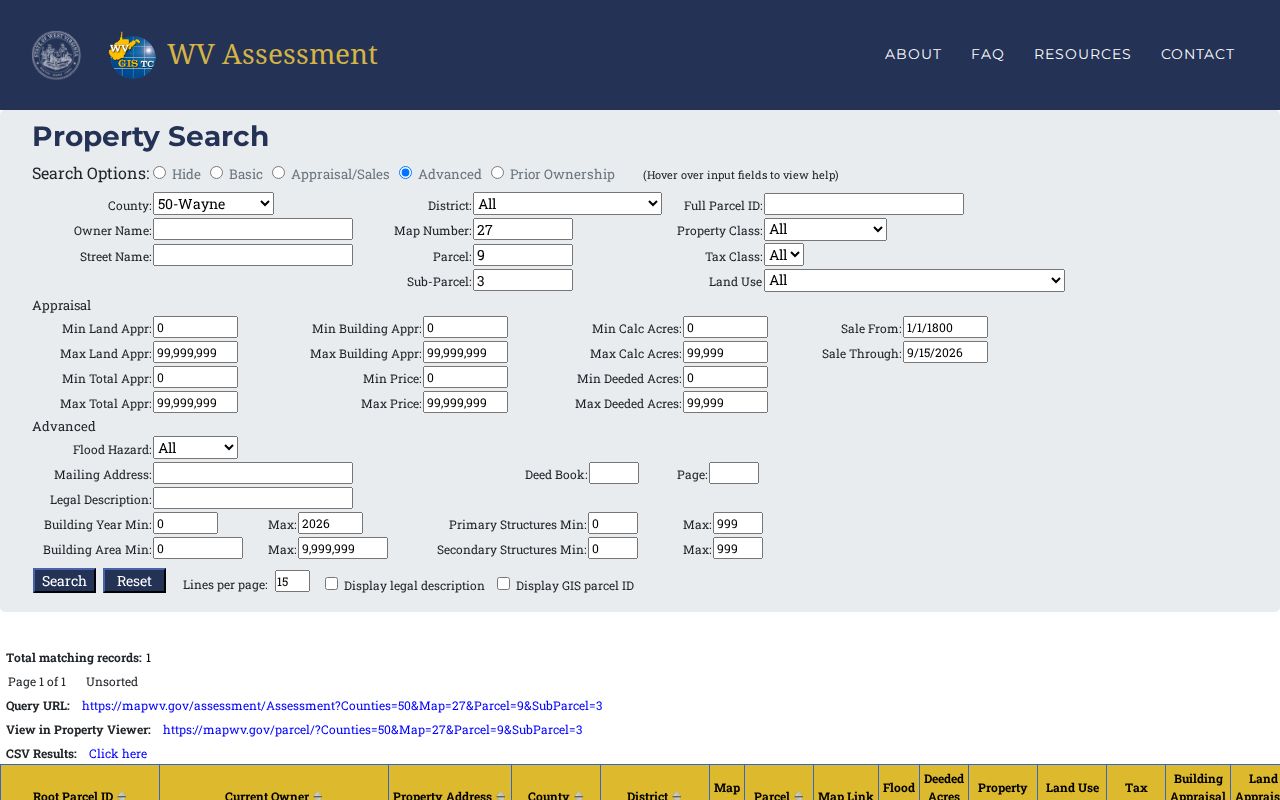
Every parcel still gets read from its own record.
Wayne County Delinquent Tax Records
The parcel viewer includes a delinquent-lands layer that is updated weekly. The State Auditor also keeps the statewide delinquent-land record. It covers property sold for unpaid taxes, nonentered land, and redemption status. A delinquent balance alone does not mean a sale has occurred. Before treating a parcel as transferred, check the public notice. Also check the tax account and the recorded deed.
The viewer describes an approximate redemption period before auction. The exact timeline can vary by event, so confirm it in the parcel’s notice. Use county, map, parcel, owner, and tax year together in your search. The Sheriff’s Tax Bureau can confirm a bill. The County Clerk can confirm a recorded tax deed or release. The State Auditor can provide the delinquent-land record.
The delinquent layer sits beside the map in the viewer. Tax-bill details remain with the Sheriff.
Ask About Wayne County Exemptions
The assessor's land book tracks classification and exemptions. No Wayne County application or eligibility list appears online. Do not infer a homestead credit from a mailing address, an owner name, or a tax class. Ask the Assessor which form applies. Confirm what proof the current tax year requires as well. When you contact the office, bring the parcel ID, district, owner name, and assessment notice. Ask whether an exemption exists, when it took effect, and whether the record can be corrected. Get any copied form from the official state tax-form page or the county office itself. A third-party summary is no substitute. Owner name alone will not answer the question. West Virginia Tax Division forms and publications offer a statewide starting point for property records questions.
Question a Wayne County Assessment
An assessment can be challenged when its parcel description, class, or valuation looks wrong. Wayne County's appeal steps are not fixed online. Contact the Assessor and request the written procedure. Ask which office hears a value appeal. Ask what evidence it accepts and how the filing date is measured. Keep a copy of the assessment notice, photos, deed, survey, and any comparable sales that explain the issue. Question an appraisal before the bill arrives. State law and the office schedule control the path. An older page or generic county calendar may not match the current review cycle. The Assessor lists real-estate staff at 304-272-6349 and mapping at 304-272-6366. Name the exact parcel and disputed field.
Deadline check. Research did not confirm Wayne County’s current appeal date or form. Contact the Assessor promptly, request the written calendar and filing instructions, and keep the parcel ID and assessment notice together.
Recent Wayne County Transfers and Tax Bills
A newly recorded transfer may not change the name printed on the next tax bill. Wayne County fixes the tax file on July 1. That date governs the following year. The Clerk's deed index reflects each recorded instrument by its recording date. A bill may still arrive addressed to the former owner. Compare the tax year, ticket, parcel ID, deed date, and payment status first. That check usually rules out a duplicate bill or the wrong parcel. The Sheriff Tax Bureau can explain the account by ticket and year at 304-272-6723. The County Clerk can help verify the recorded conveyance at 304-272-6362. Keep the deed reference and tax notice together. Ask either office to reconcile the name or mailing address. A tax account is not a title report. A deed record does not prove taxes were paid.